What is a realistic SAT score goal? Start with your U.S. college list
Set a realistic SAT target using official testing policies, score information and a personal baseline.

Students preparing for US college admissions often worry about SAT goals, such as whether 1400 is sufficient or if they need to score 1500 or higher. However, there is no single acceptance threshold applied by all universities.
You must first examine the universities you are applying to.
Check School-Specific Policies and Admissions Data First
Check the SAT submission policies of your target universities first
Check the university's official admissions guide to see if test scores are mandatory, optional, or if there are other policies for the academic year you are applying to. Standards vary by school, and policies may change depending on the application period.
You should not judge this year's requirements based solely on others' experiences from last year.
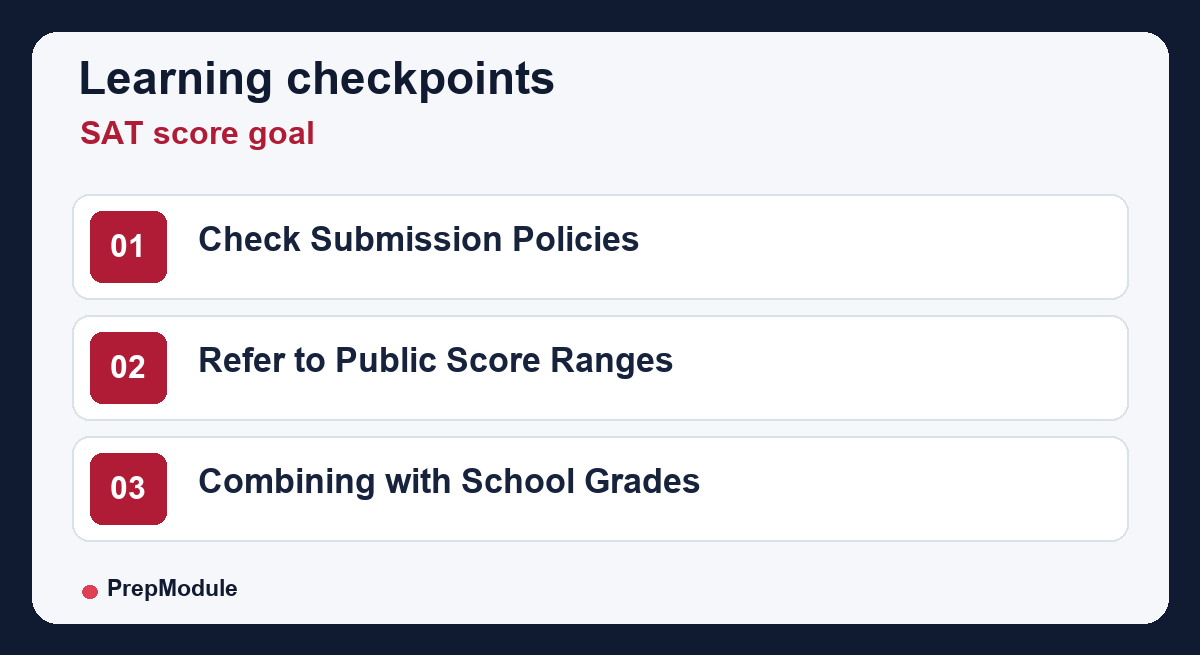
The publicly available score ranges are for reference only.
If universities have released score data for incoming or accepted students, you can compare it with your mock exam results to determine a realistic target range.
However, falling within that range does not guarantee acceptance, nor does being outside the range automatically mean rejection.
Also, examine which group the score data was compiled based on.
Consider exam preparation and school life together.
Identify the areas where you are lacking to reach your target score and the time required for improvement, and consider the impact this will have on your school GPA or the preparation of your admission documents.
Reviewing a test preparation schedule tailored to your situation along with a list of universities makes it easier to determine what to prepare next.
How to Create a Target Score Table
Write down the test score submission policies, freshman score distributions, and major-specific requirements separately for each prospective university. The middle 50% range disclosed by universities is a statistic describing a specific group of past admitted or enrolled students. The bottom figure does not mean the minimum passing score, nor does receiving the top figure guarantee admission. For schools with Test-optional admission, check the policy for that year and the criteria for deciding whether to submit the test separately.
How to Set Standards Based on Current Skill Level
For example, a student with a relatively high Math score but low Reading and Writing scores should identify weaknesses in each area rather than simply trying to raise their overall score. Examine the content domains of Bluebook mock exams to determine specific units to improve, and manage your school grades and other application factors together. It is realistic to determine when to retake the test by first considering your school schedule, which you cannot compromise on.
From Target Scores to Actual Preparation Plans: The Difference Between Counseling and Classes
Checking Admission Requirements by University
Examine your desired universities' admission testing policies and publicly available score distributions to determine when it is realistic to complete the test. When consulting with former U.S. college admissions officers, discuss your grades along with other application factors.
Strategies Based on Current Scores
Check your accuracy and time usage by section in recent official mock exams. Consider the differences between Math and Reading & Writing, as well as your next test schedule, to decide which section to focus your classes on.
Tests and Admissions Counseling Can Be Separated
You can receive only the university list and test policy counseling, and then apply for SAT classes separately later when needed.
Combining with School Grades
Official resources
SAT Target Scores and Admissions Counseling
At PrepModule, you can consult U.S. university admissions experts, including former Harvard College admissions officers. You can also discuss coursework and extracurricular preparation with subject tutors, including an MIT computer science major and a research and writing tutor pursuing a PhD in Political Science at LSE.
You can request admissions counseling on a per-session basis, and afterward, you can choose as many necessary classes and activity preparations as you like.
Please let us know your current SAT score and desired college and major. We will consult with you regarding your current application plans and provide advice on classes that will help with your test preparation.
