Blank is a strategy
A blank earns 1.5 points and a wrong answer earns nothing. We train a decision rule for every question, so guessing stops costing points.
AMC 10/12, the John Locke Global Essay Prize and the Harvard International Review Academic Writing Contest. We start from how each one is scored, then build a 1:1 plan that fits the student’s level and calendar.
What the student produces, how it’s judged, and where the points are actually decided.
| AMC 10 / 12 | John Locke Global Essay Prize | HIR Academic Writing Contest | |
|---|---|---|---|
| Format | 25 questions · 75 minutesMultiple choice, by the MAA | One argumentative essayUp to 2,000 words | One short journal-style articleAbout 800–1,200 words · grades 7–12 |
| What it tests | Problem solving under time pressure — algebra, geometry, number theory, combinatorics | An original, defended argument in philosophy, politics, economics, history, psychology, theology or law | Analysis of an international-affairs question, backed by evidence and ending in a clear argument |
| How it’s scored | +6 correct · +1.5 blank · 0 wrong150 points maximum | Read by academic judgesKnowledge, argument, originality, structure | Scored against a published rubricFinalists may be invited to an oral defense |
| Where it’s decided | The last ten questions — and knowing when to leave one blank | One sharp thesis that survives the strongest counterargument | An under-covered angle and evidence instead of opinion |
| When | Early November2026: Nov 5 (A) · Nov 13 (B) | Register by end of March · submit by end of May | Deadlines change each cycle — we confirm the current one |
Dates and rules come from each organiser and change from year to year. We check the current rules with you before planning.
Most students start two to three months before a deadline. Here’s how the year usually falls.
American Mathematics Competitions · Mathematical Association of America
“Start from the scoring rules — then stop losing the points you already know.”
A blank earns 1.5 points and a wrong answer earns nothing. We train a decision rule for every question, so guessing stops costing points.
About three minutes a question on average — but not evenly. Fast through the early questions, deliberate in the middle, selective at the end.
Strong scores are decided in the last questions — usually combinatorics and number theory. We build the techniques those problems reward.
Top scorers are invited to the AIME. For students aiming there, the plan is built as a first step toward it.
| Stage | Format | What happens |
|---|---|---|
| 1Diagnose | Timed practice | A past paper under real timing → weak topics, a target score, and a personal plan. |
| 2Foundations | Live 1:1 | Core topics in algebra, geometry, number theory and combinatorics — and getting faster at each. |
| 3Problem types | Live 1:1 | Recent question types, error patterns, and when to leave a question blank. |
| 4Mock exams | Timed practice | Full papers under real timing, each followed by a review of where the minutes went. |
| 5Final week | Live 1:1 | Last review, an exam-day checklist, and one more pass over weak problems. |
The number of sessions depends on the student’s starting point and the deadline. Our team confirms the plan with you before anything starts.
John Locke Institute · seven subject categories plus a junior prize
“One strong thesis, defended all the way down.”
The essay has to take a position and defend it. We narrow the prompts by interest × arguability × how different the answer can be.
Read the mainstream view first, then find what it misses. That second question is usually where the essay lives.
The best essays state the strongest objection and answer it. Every outline has a counterargument section before drafting starts.
Within the limit, every paragraph has to serve the thesis. Editing focuses on cutting what doesn’t.
| Stage | Format | What happens |
|---|---|---|
| 1Question | Live 1:1 | Pick the category and prompt, review the student’s first research, settle the direction of the thesis. |
| 2Outline | Live 1:1 | Thesis, line of argument, counterargument and evidence plan → the student writes a draft. |
| 3Draft review | Live 1:1 | Check the argument’s structure and agree what to strengthen. |
| 4First edit | Live 1:1 + written feedback | Detailed comments on argument, evidence and structure → the student revises. |
| 5Final edit | Written feedback | Sentences, tone and word count, plus a check against the submission rules. |
The number of sessions depends on the student’s starting point and the deadline. Our team confirms the plan with you before anything starts.
Harvard International Review · Junior (grades 7–8) and Senior (grades 9–12) divisions
“Write in the voice of the journal, not an opinion column.”
Summaries of the obvious story don’t stand out. We look for an angle only this student is well placed to write.
Data, cases and how the system works. The outline is fixed as situation → causes → implications before drafting.
Academic tone, accurate citations and the formatting rules. We edit against published HIR articles.
Finalists may be asked to present and defend their article. Feedback sessions run as questions and answers to prepare for it.
| Stage | Format | What happens |
|---|---|---|
| 1Prompt & angle | Live 1:1 | Read the current prompts, review the student’s issue brief, settle a distinct topic. |
| 2Research & outline | Live 1:1 | A policy-analysis frame and a plan of credible sources → the student writes a draft. |
| 3Draft review | Live 1:1 | Depth of analysis, flow, and where citations need support. |
| 4Content edit | Live 1:1 + written feedback | Comments on analysis, evidence and implications → the student revises. |
| 5Style & defense | Live 1:1 + written feedback | Journal tone, citation format and length — then practice answering a judge’s questions. |
The number of sessions depends on the student’s starting point and the deadline. Our team confirms the plan with you before anything starts.
We prepare students for many more — in math, science, computing, writing, economics and debate. The same approach applies: start from how it’s judged.
From the middle-school AMC 8 to the AIME invitational and UK challenges.
Biology, chemistry and physics olympiads, and independent research for science fairs.
Algorithmic contests and building projects under a deadline.
Creative writing, history research essays and journalism contests.
Economics tests and investment or business case challenges.
Research, argument and speaking — prepared like the essay competitions.
Tell us its name and deadline. Our team checks who can prepare the student for it.
Eligibility differs by competition and by country — we check whether the student can enter before planning.
Competition prep goes through the same consultation and matching as all our tutoring. These tutors cover the subjects these competitions draw on.

For John Locke and HIR — political science, international relations and academic writing, from an LSE PhD candidate who teaches undergraduates.
View expertise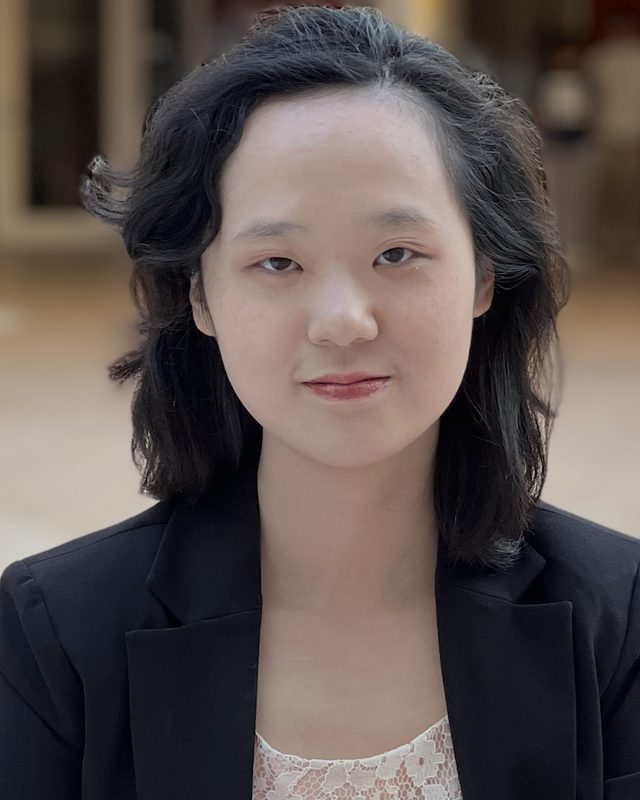
For AMC — calculus, statistics and timed problem solving, from an MIT computer science graduate with top AP and ACT scores.
View expertiseWe don’t promise awards or placements. What we promise is a plan built around how the competition is judged — and work that stays the student’s own.
Tell us the competition, the student’s grade and the deadline. We start with a consultation and come back with a plan and a tutor.