U.S. humanities majors: History, English and Philosophy
Explore humanities majors, recommended high-school courses, critical reading, essay writing, debate and independent thinking activities.
Among students preparing for U.S. universities, there are many who say, "I find reading books and writing more interesting than math." Rather than vaguely grouping the humanities under the liberal arts, it would be beneficial to examine what materials are actually read and what questions are answered within this discipline.
History, English, Philosophy, Linguistics
History interprets past events, society, and contexts using historical sources and records. English or Literature is a field that reads and analyzes the language, form, and cultural context of various works. Philosophy deals with fundamental questions such as ethics, knowledge, existence, and logic, placing emphasis on logically examining arguments. Linguistics conducts systematic research on the structure and use of human language and, depending on the field, may be connected to statistics or computing. Each university offers multiple sub-fields within a single department or operates cross-major programs.
What competencies are developed in these classes?
Subjects such as IB English A, IB History, AP History, AP English Language or Literature, and A-Level English Literature or History are excellent for students to gain reading and writing experience. Identify the language subjects and course combinations required by your target program, and practice reading materials in school and clearly presenting the evidence that supports your interpretation.
Humanities projects begin not with writing long texts, but with thinking about what evidence is needed for a particular argument.
Long-term Activities
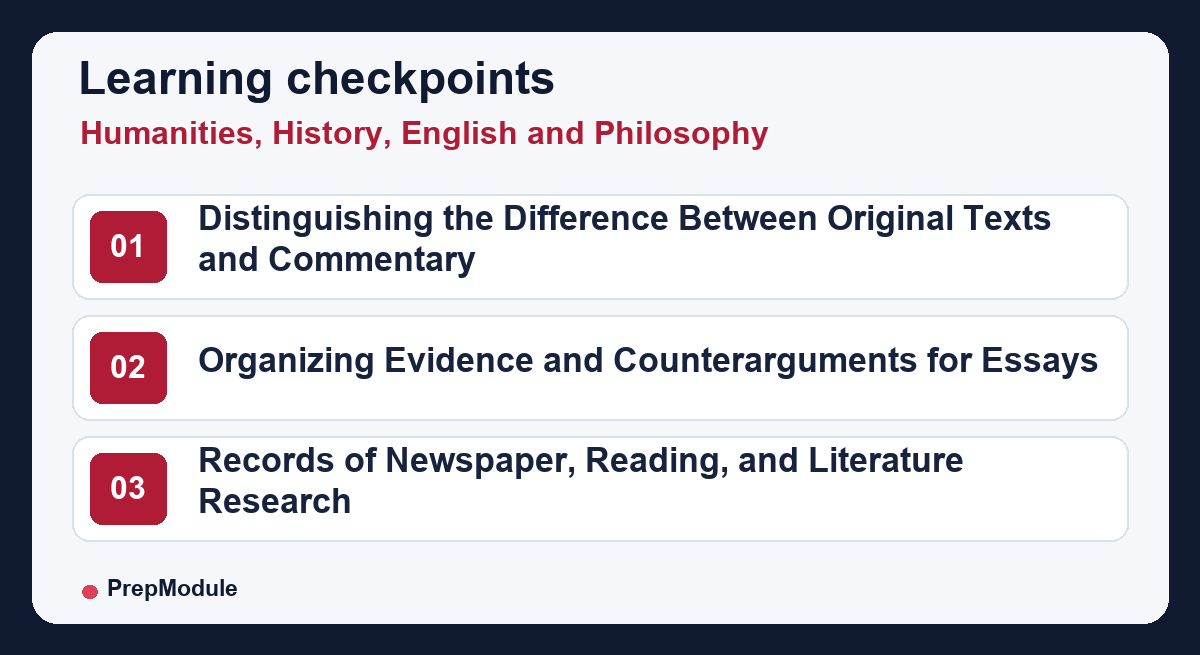
If you are interested in History, you can select materials from publicly available local history records or museum digital archives to explore a specific topic. Compare how different chroniclers viewed a single historical event. Consider the time and purpose of the records, as well as any missing information, and meticulously cite your sources.
If you are interested in Literature, you can run a book club or write a short essay analyzing how a common theme appears differently in two works. Philosophy students can choose an ethical point, examine arguments for and against it, and clearly articulate the premises and conclusions they accept.
Essays and School Activities
You can look into essay competitions that argue major-related issues, such as the John Locke Essay Competition, or participate consistently in the school newspaper, debates, and book discussions. The writing submitted to the competition must be written by the applicant themselves in accordance with the participation rules. The process of creating a logical and easy-to-read text is more important than simply using many difficult words to win the evaluation.
How do I leave a record of my work?
Do not just create a list of books you have read; try briefly noting down your initial questions, the materials you have read, and the parts where your thoughts have changed. At the end of the semester, select the topic you explored most deeply and summarize it in a short presentation or written piece. If you disagreed with a friend, it is also helpful to record what you newly examined.
Shall we read the same text from the perspective of a different major?
Let's assume you are reading a newspaper article from a fictional era. In History, you can compare the content with other historical sources regarding the time the material was created, the author, the audience, and the social background. In Literature, you can analyze the vocabulary, narrative, expressions, and the meaning conveyed to the reader. In Philosophy, you can examine the premises and logical structure of the arguments included in the article and review the criteria for judgment. If you are interested in linguistics, you can consider how specific expressions change depending on the context and language usage.
While majors can be interconnected, the basic and advanced courses actually taken at university differ. Look through the official course catalogs of your target universities for seminars, writing courses, logic, and language-related subjects, and refine the questions you like.
Example of a 4–6 Week Reading Project
Select two different public texts covering a single topic and record the key arguments of each during the first week. Then, identify the sources of the sentences and materials to compare where the perspectives of the two texts align or conflict. Finally, you can create a short essay or presentation analyzing the student's questions. You must accurately distinguish the expressions and meanings of the actual texts and record the sources of the materials cited.
Forming a book club with friends to hear diverse opinions can also be helpful. Rather than simply expanding your reading list, it is meaningful to record which parts were difficult to understand and how your questions changed.
Criteria for Selecting Curriculum and Extracurricular Activities
Gain experience in reading, argumentation, and data analysis within the school’s English, History, Philosophy, and Social Sciences courses. Depending on your interests, you may consider participating in Debates, school newspapers, book clubs, or student essay competitions. The process of writing independently, receiving teacher feedback, and revising can demonstrate your interests and direction of growth. Follow the submission rules for each competition, and write the actual essay for evaluation yourself. The process of deepening your thinking is more important than the number of activities or a flashy list of awards.
Designing Academic, Reading, and Writing Courses for Humanities Majors
Identifying Interests and Academic Direction
Students interested in History, Literature, and Philosophy should summarize which books, eras, and social issues sparked their questions. This allows for a comparison of the reading and argumentation skills required by relevant university majors.
Development of Students' Reading and Argumentation Skills
Read a single source and summarize the core argument, the context in which it was written, and opposing viewpoints in a notebook. Discuss academic reading and writing classes where students compare two texts to logically present their own interpretation based on the source material.
Connecting Admissions with Activities
Students can request separate admissions counseling and classes in their chosen areas of interest, such as the John Locke Essay, debate, and school History or English subjects. This class is designed to develop the student's own writing and thoughts.
In the humanities, consistent reading and writing that demonstrates how one's questions and thoughts have evolved is a good starting point.
Official resources
Preparation for History, English, and Philosophy Majors
PrepModule supports the learning needs of each student, ranging from international school curriculum to U.S. university admissions. We have teachers specializing in various fields, including a tutor in politics, research, and academic writing who is a PhD candidate in Political Science at LSE and an Oxford researcher.
You are not bound by long-term packages; you can select the subjects and writing areas you need individually and apply for as many times as you desire.
Please share the student's topics of interest, books currently being read, and experience with school essays. You can discuss classes for in-depth reading, argumentation, and academic writing.
