U.S. college extracurricular activities: is doing more always better?
Plan authentic activities aligned with interests, responsibilities and learning rather than collecting titles.
When considering US college admissions, you may be wondering how to prepare for extracurricular activities, or EC (Extracurricular Activities).
Winning a prestigious competition or obtaining a club position is an experience in itself, but not all students need to prepare for activities in the same way.
Reflecting on the process and student interests rather than the number of activities
What kind of activities are meaningful to the student?
Look at what role the student took on and what problems they solved in activities they participated in with interest. There is a difference between simply being a member of a club and gaining experience by actually working on a project.
You should understand the student's specific efforts and learning rather than just the name of the activity.
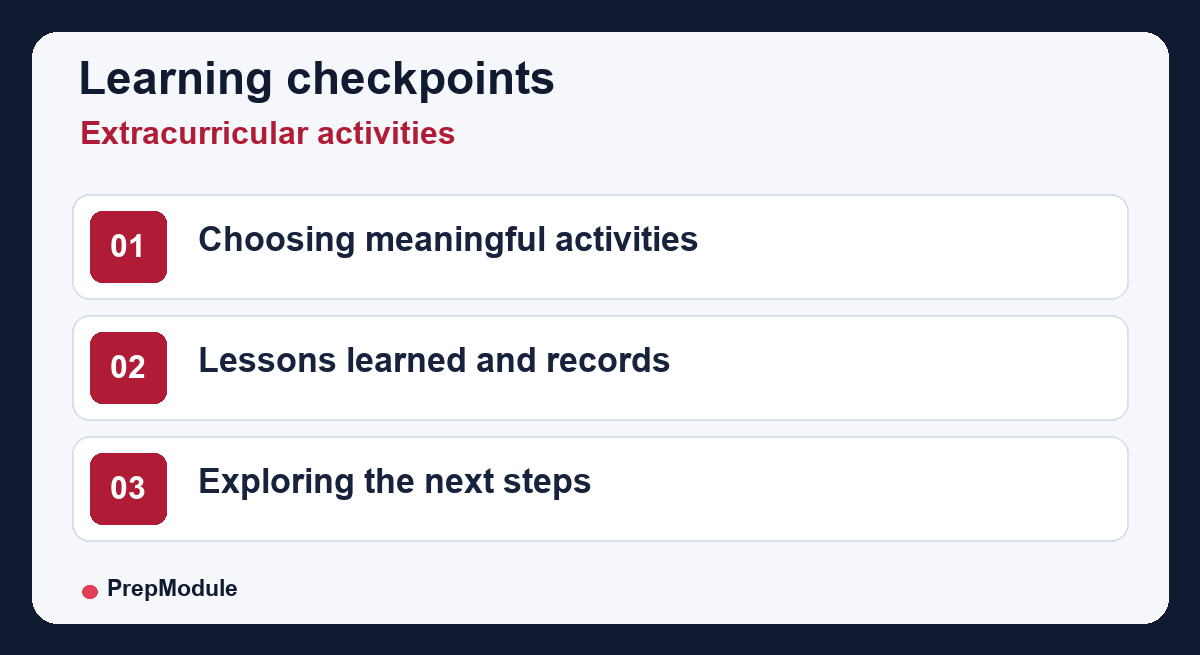
Why keeping a record of activities is helpful
For example, if you participated in a school math club, record which meetings you attended, what you prepared or what tasks you were responsible for, and how you resolved any difficulties.
You can rely on actual experiences and evidence when organizing your application, such as on the Common App, in the future. You should not exaggerate the facts or describe activities as having been created by someone else.
Find the next step in activities you are already doing
If it is a field where your interest persists, you can explore it more deeply or take on new responsibilities. You must also consider the student's academic burden and time commitment.
Before worrying about what to add, it would be helpful to examine what direction you can establish from your current activities.
The same activity can be described differently depending on the method of participation
For example, let's say there are two students participating in the student council. One student attended meetings, while the other took on the role of collecting opinions at school events to identify issues with operational methods and creating new informational materials. Although both participated in student council activities, their assigned responsibilities and what they learned may differ. It is better to reflect on how they actually contributed rather than focusing solely on obtaining the position.
What should be written in the activity log?
Record the activity name, duration of participation, the problem or goal, your role, actual results, and future plans. Do not merely record competition awards or the number of participations; also organize the process in a way that you can understand and explain. Rather than trying to meet a predetermined 'number of required activities,' it is more realistic to consistently develop your interests while managing your schoolwork.
Counseling to organize ECs suitable for the student and subsequent activity classes
Analysis of existing activities
Organize on-campus clubs, academics, volunteering, family activities, and extracurricular activities to examine the role the student actually played and what was learned for each. When consulting with former admissions officers, you can also consider the field you wish to pursue and your time constraints.
Comparing possible options
If you are a student who enjoys mathematics, you can compare which direction is suitable among various options, such as math competitions, modeling, and on-campus math activities. If you are interested in writing, try linking it with reading, argumentation, and debate projects.
Follow-up learning as much as you want
You can inquire separately about specific areas you need, such as preparation for competitions of your choice, subject supplements, or classes that develop independent project capabilities.
Exploring the next steps
Official resources
Consultation on extracurricular activities tailored to the student
At PrepModule, you can consult U.S. university admissions experts, including former Harvard College admissions officers. You can also discuss coursework and extracurricular preparation with subject tutors, including an MIT computer science major and a research and writing tutor pursuing a PhD in Political Science at LSE.
You can request admissions counseling on a per-session basis, and afterward, you can choose as many necessary classes and activity preparations as you like.
Please let us know about the activities you are currently participating in, your major interests, and the number of semesters remaining. Rather than blindly adding activities, you can discuss the preparations you need right now regarding classes, projects, or competitions.
